📞 :+86-159-9748-3088 📫 :445692254@qq.com
Custom Aluminum Enclosures for Electronics: The B2B Manufacturing Guide
Discover why custom aluminum alloy enclosures are the gold standard for electronics. Learn about CNC machining, extrusion, thermal management, EMI shielding, and sourcing from a premier OEM factory.
5/14/20264 min read
Custom Aluminum Enclosures for Electronics: The Ultimate B2B Manufacturing Guide
In the rapidly evolving electronics and electrical equipment industries, protecting sensitive internal circuitry is just as critical as the PCB design itself. Modern electronic devices—ranging from industrial IoT gateways and medical diagnostics to electric vehicle (EV) power inverters and aerospace telecommunications—operate in demanding environments. They face threats from mechanical impacts, moisture ingress, extreme thermal loads, and electromagnetic interference (EMI).
To mitigate these risks, product designers and original equipment manufacturers (OEMs) rely heavily on custom aluminum electronic enclosures. Aluminum offers an ideal combination of lightweight strength, natural shielding, and excellent thermal dissipation, making it the premier material choice for high-reliability electronics housing.
As an advanced industrial manufacturing factory specializing in precision aluminum alloy customization, we have developed this technical guide. It outlines the structural benefits, manufacturing methodologies, and essential design criteria for procuring elite-tier custom electronics enclosures.
Part 1: Why Aluminum Dominates Electronic Enclosure Design
While plastics and stainless steel have their place, aluminum alloys provide unique physical and thermodynamic advantages that make them the gold standard for housing electrical and electronic assemblies.
1. Natural Heat Dissipation (Thermal Management)
Modern microprocessors, power transistors, and high-density power supplies generate substantial localized heat. If this thermal energy is trapped inside the housing, component temperatures will spike, leading to thermal throttling, shortened lifespans, or fatal hardware crashes. Aluminum possesses exceptional thermal conductivity (approximately $200 \, \text{W/m}\cdot\text{K}$). This allows the custom enclosure itself to act as a massive, passive heat sink, drawing heat away from internal components and radiating it safely into the surrounding air.
2. Built-In EMI and RFI Shielding
Electromagnetic Interference (EMI) and Radio Frequency Interference (RFI) can corrupt signal paths, distort sensor readings, and compromise wireless communication modules. Because aluminum is naturally conductive, a fully enclosed custom aluminum box forms a highly effective Faraday cage. This structural barrier blocks external ambient noise from disrupting internal microelectronics and prevents the device's own high-frequency emissions from leaking out and failing regulatory compliance audits (such as FCC or CE certification).
3. Strength-to-Weight Efficiency and Corrosion Resistance
Industrial and outdoor electrical equipment must endure harsh physical handling, environmental vibrations, and corrosive atmospheres. Aluminum delivers the structural rigidity of steel at roughly one-third of the weight, making it ideal for portable instruments and weight-sensitive aerospace installations. Furthermore, it naturally develops a protective oxide layer that resists atmospheric corrosion, which can be further enhanced via industrial surface treatments.
Part 2: Custom Fabrication Methods for Aluminum Enclosures
Depending on your production volume, budget, and internal geometry requirements, our factory utilizes three primary production techniques to customize your electrical housings:
1. Precision CNC Machined Enclosures (Billet Blocks)
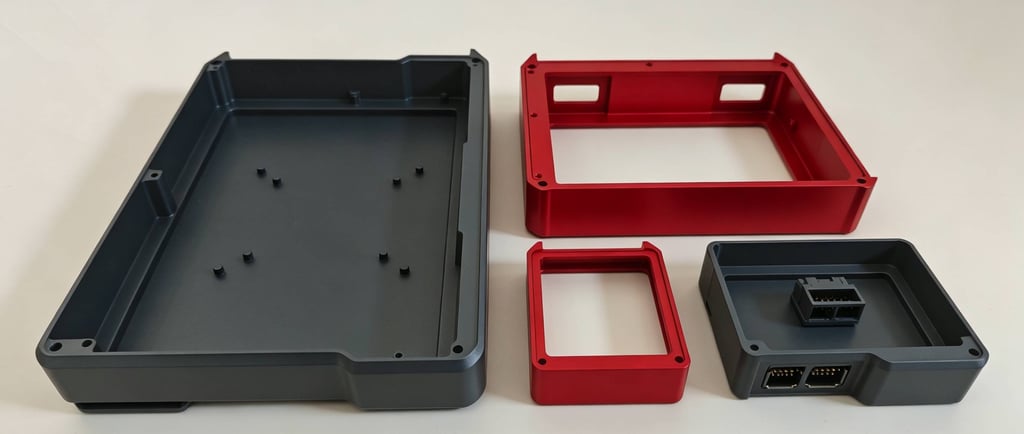
For low-to-medium production volumes, rapid prototyping, or high-end components with complex mechanical features, CNC machining is the ideal solution. Carved directly from solid 6061-T6 aluminum blocks, billet enclosures feature ultra-tight structural tolerances (down to $\pm0.01 \, \text{mm}$). CNC milling allows for the seamless integration of internal mounting pillars, complex O-ring grooves for IP67/IP68 water sealing, and intricate external cooling fins without requiring expensive tooling dies.
2. Extruded Aluminum Enclosures
For sliding-chassis rackmounts, handheld instrument profiles, and linear industrial controllers, aluminum extrusion is highly cost-effective. By forcing heated aluminum through a custom-shaped steel die, we create continuous profiles with integrated internal card guide rails for PCBs. We then cut these profiles to your specified length and utilize post-extrusion CNC machining to punch out precise connector cutouts, display windows, and mounting holes.
3. Precision Sheet Metal Fabrication
When designing large-scale industrial electrical cabinets, power distribution boxes, or modular rack chassis, custom sheet metal fabrication is the standard approach. Utilizing high-speed laser cutting, precise CNC press brake bending, and robust TIG/MIG welding allows us to create lightweight, spacious enclosures with minimal upfront tooling costs.
Part 3: Critical Surface Finishes for Electronic Enclosures
Raw machined or extruded aluminum requires a secondary finishing process to ensure long-term reliability on the factory floor or in outdoor installations. Our facility provides specialized, industry-compliant treatments:
Type II Anodizing (Protective & Decorative): An electrochemical process that thickens the natural oxide layer, turning it into a hard, non-conductive ceramic surface. It offers excellent scratch resistance and allows the enclosure to be dyed in various colors (such as sleek matte black, silver, or blue) for clear corporate branding.
Chemical Conversion Coating (Alodine / Chromate Film): Unlike anodizing, chemical conversion coatings preserve the electrical conductivity of the aluminum surface while providing baseline corrosion defense. This treatment is specified for internal chassis walls where solid electrical grounding and continuous EMI shielding electrical contact are required.
Powder Coating: A heavy-duty polymer powder baked onto the surface. It provides thick, durable protection against rock chips, impacts, and harsh chemical cleaning agents, making it ideal for heavy machinery control panels and outdoor electrical utility boxes.
Part 4: Quality Control Metrics and Global B2B Supply
At our aluminum customization factory, we recognize that a minor dimensional error in an enclosure cutout can render an entire production run of PCBs un-mountable. Our quality assurance framework ensures precision down to the last micron:
Material Verification: Every production run uses certified aluminum alloys (6061, 6063, or 5052) accompanied by Material Test Reports (MTRs) to ensure absolute structural and thermal integrity.
Automated CMM Metrology: Finished enclosures undergo verification using 3D Coordinate Measuring Machines (CMM) and digital optical profile projectors to confirm that all connector windows, threaded standoffs, and bezel clearances align perfectly with your STEP files.
Design for Manufacturing (DFM) Support: Our engineering sales team conducts a thorough DFM review of your blueprints before production begins, identifying potential tooling conflicts, optimizing airflow paths, and suggesting design tweaks to minimize unit fabrication costs.
Conclusion: Partner with a Trusted Aluminum Enclosure Factory
Custom aluminum enclosures provide the vital blend of thermal efficiency, mechanical protection, and electromagnetic isolation required to safeguard modern electronic systems. By selecting the correct fabrication method—whether it is precision multi-axis CNC milling, high-efficiency extrusion, or modular sheet metal bending—and pairing it with the ideal surface finish, our factory delivers high-performance housings that elevate your product's market readiness.
Are you looking to optimize your hardware supply chain with an experienced manufacturing partner? Our factory provides end-to-end OEM and ODM aluminum customization services tailored specifically to the rigid standards of the global electronics and electrical sectors.
Our Core Capabilities: Multi-axis CNC Machining, Custom Aluminum Extrusion, Precision Sheet Metal Fabrication, Type II/III Anodizing, and Alodine Coatings.
Request an Engineering Review: Upload your 3D CAD blueprints (STEP, IGES, or DWG formats) directly through our secure contact portal. Our engineers will provide a comprehensive DFM evaluation and a competitive commercial proposal within 24 hours!
Contact our global engineering sales division today via our website, and let us help you transform your electronic concepts into high-precision, market-ready realities!